Introduction
Data Mesh is a new way for organizations to manage and use data. Instead of having a single, central team handle all the data, Data Mesh allows different business teams to own and manage their own data. This makes data more useful, trusted, and available across the company. One of the first and most important steps in Data Mesh is to identify data domains. Finding and defining these domains helps teams work more effectively and ensures that everyone knows who is responsible for each set of data.
What is Identifying Data Domains?
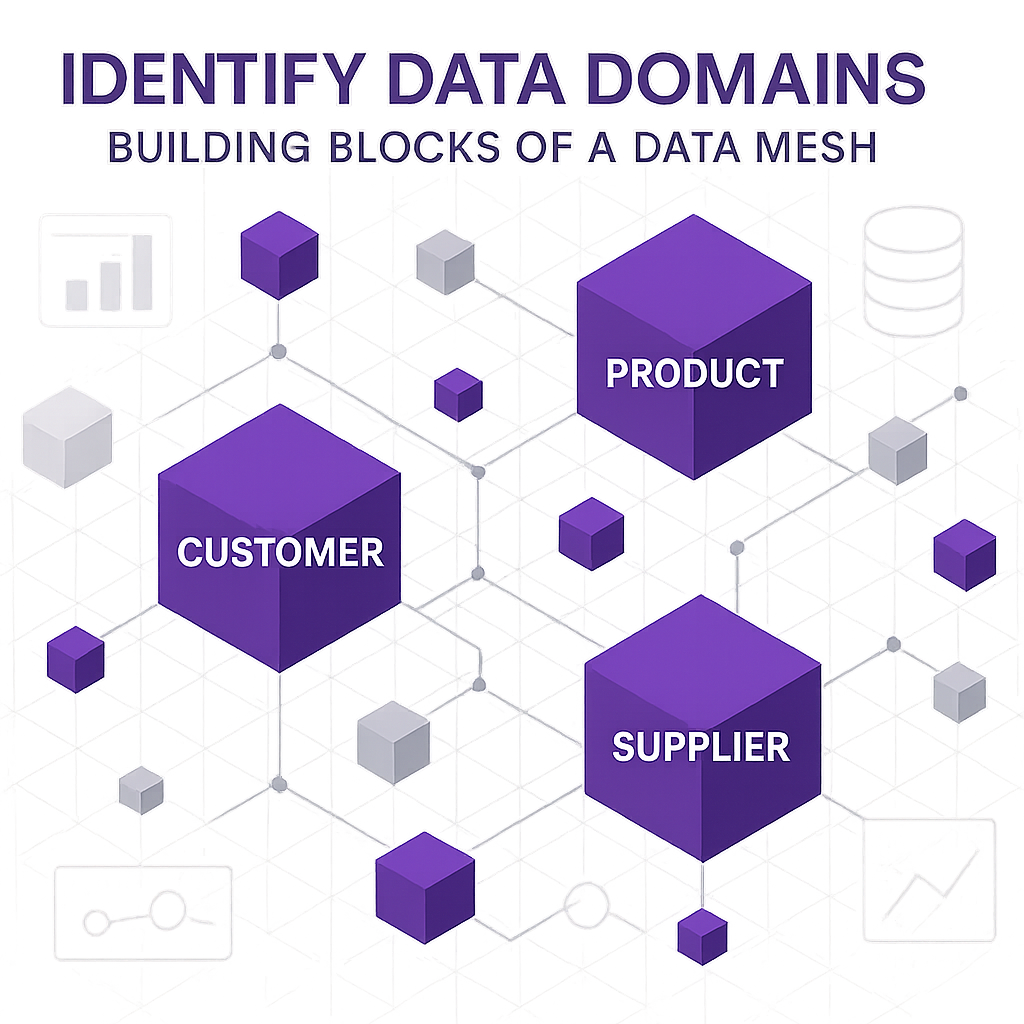
A data domain is a group of related data that corresponds to a specific business function, such as Sales, Finance, or Operations. In Data Mesh, each domain is treated like a product. This means the team in charge of the domain is responsible for ensuring the data is of high quality and easy to use for others within the company.
For example, the Sales domain might include all the data about customers, orders, and revenue. The Finance domain could include budgets, expenses, and payments. By breaking data into domains, companies can make sure the right people are in charge of the right data.
Key Activities and Best Practices
- Break Down the Company into Business-Aligned Domains:
Start by looking at how your business is organized. Each major area, like Sales, Marketing, or HR, can be a domain. Consider the data each team uses and creates on a daily basis.
- Assign Clear Ownership and Accountability:
Each domain should have a team that owns it. This team is responsible for the quality, security, and sharing of the data. The domain owner acts like a product owner, making sure the data meets the needs of others.
- Start with High-Impact Domains:
Begin with domains that have the biggest effect on your business. For example, if customer data is very important, start with the Sales or Customer domain. This helps show quick wins and builds support for Data Mesh.
- Define and Refine Domains Over Time:
Domains are not set in stone. As your business changes, you may need to split, merge, or adjust domains. Review domains regularly to make sure they still make sense for your company.
Challenges and Solutions
- Overlapping Domains:
Sometimes, two teams may want to own the same data. To solve this, talk with both teams and agree on clear boundaries. Use contracts to define who provides what data and how it is shared.
- Unclear Ownership:
If no one wants to own a domain, it can lead to poor data quality. Make sure every domain has a clear owner and that their role is understood and supported by leadership.
- Changing Business Needs:
As your company grows, domains may need to change. Be flexible and review domains often to keep them aligned with business goals.
Data Governance Considerations
Data governance is about establishing rules and ensuring that everyone follows them. In Data Mesh, each domain team must follow company-wide regulations for privacy, security, and data quality. The domain owner is responsible for making sure their team follows these rules. At the same time, there should be a central group that helps set standards and checks that domains are working together smoothly.
Business and Cultural Impact
Clear data domains enable teams to work more effectively together. When everyone knows who owns what data, it is easier to find answers and solve problems. This leads to improved data quality and enables the business to make faster, more informed decisions. It also fosters a culture where teams take responsibility for their data and are proud to share it with others.
Practical Tips and Checklist
Tips:
- Begin by creating a map of your business areas and the data they utilise.
- Consult with business leaders to determine which domains are most important.
- Assign a clear owner to each domain.
- Write down the rules for each domain, including what data it covers and who can use it.
- Review domains regularly and adjust as needed.
Checklist:
- List all major business areas.
- Identify the main data used and created by each area.
- Assign a domain owner for each area.
- Set clear rules and responsibilities.
- Review and update domains as the business changes.
Conclusion
Identifying data domains is a key step in building a Data Mesh. It helps teams take ownership of their data, improves quality, and makes it easier for everyone to find and use the data they need. By starting with clear domains, your company can move forward on the Data Mesh journey with confidence and success.
.